Your basket is empty
Looks like you haven't added anything to your basket yet


Which Berkel Slicer Is Right for You? A Complete UK Buying Guide

Five slicers. Three ranges. Prices from a few hundred pounds to nearly two thousand. If you are trying to work out which Berkel slicer is right for you, this guide covers everything: what separates the ranges, what the specs actually mean in practice, and which machine suits which kind of cook.
The Berkel Domestic Slicer Range at a Glance
Berkel makes five electric slicers for home and light commercial use. They sit across three ranges: the Icon Line, the Home Line Plus, and the Red Line. Each has a different design brief and a different price point, and within the Home Line Plus and Red Line there are two blade sizes to pick from. The table below gives you the key specs side by side.
| Model | Blade | Motor | Max thickness | Blade sharpener | Weight |
|---|---|---|---|---|---|
| Icon Line 170 | 170mm | 0.19 kW | 18mm | No | – |
| Home Line Plus 200 | 195mm | 0.19 kW | 18mm | No (optional) | 12.5 kg |
| Home Line Plus 250 | 250mm | 0.19 kW | 18mm | No (optional) | 14.5 kg |
| Red Line 250 | 250mm | 0.19 kW | 14mm | Yes (integrated) | 22 kg |
| Red Line 300 | 300mm | 0.31 kW | 12mm | Yes (integrated) | 27 kg |
Home Line Plus 200
Blade: 195mm
Motor: 0.19 kW
Max thickness: 18mm
Blade sharpener: No (optional)
Weight: 12.5 kg
Home Line Plus 250
Blade: 250mm
Motor: 0.19 kW
Max thickness: 18mm
Blade sharpener: No (optional)
Weight: 14.5 kg
Red Line 250
Blade: 250mm
Motor: 0.19 kW
Max thickness: 14mm
Blade sharpener: Yes (integrated)
Weight: 22 kg
Red Line 300
Blade: 300mm
Motor: 0.31 kW
Max thickness: 12mm
Blade sharpener: Yes (integrated)
Weight: 27 kg
One comparison worth flagging before diving into each model: the Red Line 250 and Home Line Plus 250 share the same blade diameter but are very different machines to live with. The Red Line 250 weighs 22 kg against the Home Line Plus 250's 14.5 kg, is built from a heavier single-mould aluminium body, and includes an integrated blade sharpener as standard. If you are deciding between those two specifically, the choice comes down to how seriously you use a slicer and how long you want it to last, not blade size.
A Note on Slicing Cheese
Worth covering this upfront since it comes up a lot. The standard chromed steel blades on the Home Line Plus and Red Line models are designed primarily for meats and charcuterie. Cheese can stick to the smooth blade surface during slicing, which disrupts the cut and makes a mess of cleaning. This is compounded by the fact that the Home Line Plus and Red Line are belt-driven machines: the belt transmission is quieter and lower maintenance, but it does not handle the extra resistance that sticky, dense products like hard cheese create as effectively. Softer cheeses can be sliced occasionally without too much difficulty, but regular cheese slicing on these models is not what they are built for.
For the Red Line models, Berkel produces an optional Teflon-coated blade. The non-stick surface prevents cheese from adhering to the blade, which solves the problem cleanly. We can procure this blade for Red Line customers. Get in touch if that is something you need.
The Icon Line 170 handles cheese more comfortably as standard. It uses a gear-driven transmission rather than a belt, which means it maintains consistent blade speed and torque even when cutting through denser, stickier products. For anyone whose slicing is cheese-heavy, that is worth factoring into the decision.
The Icon Line 170: A Proper Slicer That Doesn't Take Over Your Kitchen
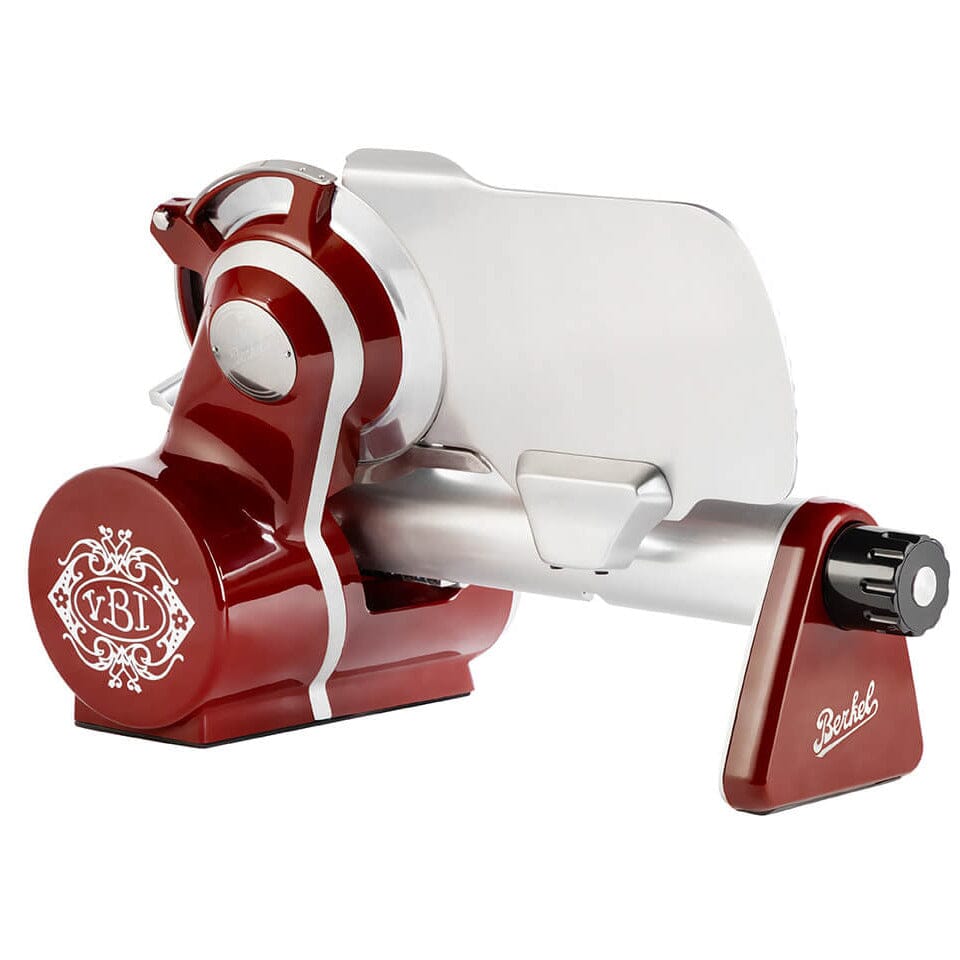
The Icon Line is the one to consider if you want to get into home slicing without committing to a large machine. It is compact, relatively light, and handles the jobs most people actually do day to day: prosciutto, salami, cooked meats, softer cheeses, vegetables, and smaller cuts of charcuterie. The 18mm maximum thickness is generous for a machine at this size, so it covers more than just paper-thin slices.
The honest limitation is blade diameter. At 170mm, you will hit the edges of the cutting circle with larger products, such as a thick ham joint, a big piece of cheese or a wide bresaola. For everyday portions and charcuterie boards it is perfectly comfortable. For anyone who regularly buys whole joints or large cuts, the Home Line Plus is a better starting point.
The Icon Line 170 is also the only model in the Berkel domestic range with a gear-driven transmission. The other four models use belt drives, which are quieter and easier to maintain but less suited to denser products. The gear drive is one of the reasons the Icon Line handles cheese more reliably than the Home Line Plus models without any blade modifications.
There is currently no blade sharpener available for the Icon Line 170, although Berkel is developing one for the future. It is a sensible, no-nonsense machine for a first slicer, and the price reflects that.
The Home Line Plus: More Capacity for Regular Slicing
The Home Line Plus is the range to consider when you want more blade size and cutting capacity than the Icon Line 170 while still keeping the machine practical for a home kitchen or light professional use. Both models run the same 0.19 kW motor with 18 thickness settings, an IP65-sealed control panel with LED indicators, and automatic power-failure shutdown. The main difference between the 200 and 250 comes down to blade size and cutting capacity.
Home Line Plus 200

The 200 is the smaller of the two, with a 195mm blade and a weight of 12.5 kg. That makes it the most manageable Home Line Plus option for a typical kitchen worktop, and it handles everything you would throw at it day to day. Cooked hams, salami, prosciutto, smoked salmon, vegetables, and bread are no problem. Where it starts to feel a bit snug is with larger whole products, like a big cooked joint or a wide salami. If most of what you slice is charcuterie-sized, it is ideal. If you regularly buy bigger cuts, the 250 is worth the step up.
The 200 comes with a blade extractor for safe blade removal and cleaning, a tilting food plate, and a dishwasher-safe product press holder. A separate blade sharpener is available and worth picking up alongside it.
Home Line Plus 250

The 250 gives you the same motor and the same feature set as the 200, with a 250mm blade and a bit more carriage space. At 14.5 kg it is slightly heavier but still very manageable. The extra blade diameter makes a real difference if you regularly slice larger joints of cooked meat, bigger pieces of cheese, or whole salamis and cured sausages. It is also the better choice if you are running a small food business, a deli, or a café where the slicer gets used every day.
For a household that entertains a lot or takes charcuterie and smoked meats seriously, the 250 tends to be the one people are glad they bought rather than the 200. The footprint difference on the worktop is not dramatic, but the extra capacity means you are never fighting the machine with a bigger product.
The Red Line: A Different Category Entirely
The Red Line is a substantial step up from the Home Line Plus in construction, weight and long-term slicing capability. At 22 kg, the Red Line 250 has a single-mould aluminium alloy body that gives it considerably more stability during use. It feels and performs like a more substantial machine while remaining manageable enough for a serious home kitchen or hospitality setting.
Both Red Line models also include an integrated blade sharpening system, which is a bigger deal than it might sound. Being able to sharpen the blade directly on the machine without removing it means you will actually do it regularly, keeping slicing performance consistent over months and years of use.
Red Line 250

The Red Line 250 shares its 0.19 kW motor with the Home Line Plus models but the construction around it is in a different league. The 250mm blade, integrated sharpener, and heavier aluminium body make it the right machine for anyone who wants professional-grade build quality in a domestic size. It handles the same range of foods as the Home Line Plus 250 and does it with more stability and longevity built in.
As mentioned above, if you plan to slice cheese regularly on a Red Line, the optional Teflon blade is the way to go. Contact us and we can sort that for you.
The Red Line 250 is ideal for serious home cooks and small food businesses who want premium Berkel build quality, excellent slicing performance and an integrated sharpener in a more manageable 250mm machine.
Red Line 300

The Red Line 300 is the largest slicer in the Berkel domestic range. The 300mm blade handles a circular cutting capacity of 230mm and a rectangular capacity of 245 x 230mm, which covers almost anything you would realistically want to slice at home or in a small commercial setting. The motor steps up to 0.31 kW, giving it noticeably more power for larger volumes and tougher products. At 27 kg, it is a machine you put down and leave in one place.
The Red Line 300 is ideal for serious home cooks and food businesses who need premium Berkel build quality with extra blade size, power and cutting capacity for larger products or higher slicing volumes.
Same note on cheese as the 250: the Teflon blade is available on request. Get in touch if you need it.
Accessories Worth Considering
Whichever slicer you go for, a few accessories make a genuine difference to how it works day to day. An ash wood cutting board is available for both the Home Line Plus and the Red Line, sliding directly onto the machine to catch slices cleanly as they come off the blade. A dust cover is practical if the machine lives on the worktop between uses. For Home Line Plus owners, the blade sharpener is the one accessory we would always recommend buying at the same time. The Berkel cleaning kit covers routine maintenance for any model.
So Which One Should You Buy?
| Model | Buy it if... |
|---|---|
| Icon Line 170 | You are new to home slicing and want something compact and straightforward, or cheese is a regular part of what you slice. |
| Home Line Plus 200 | You want a proper professional machine for regular home use, have a smaller kitchen, or mainly slice charcuterie-sized products. |
| Home Line Plus 250 | You regularly slice bigger joints, entertain a lot, or run a small food business and need the extra blade capacity. |
| Red Line 250 | You want premium Berkel build quality, excellent slicing performance and an integrated sharpener in a more manageable 250mm machine. |
| Red Line 300 | You need premium Berkel build quality with extra blade size, power and cutting capacity for larger products or higher slicing volumes. |
Icon Line 170
Buy it if...: You are new to home slicing and want something compact and straightforward, or cheese is a regular part of what you slice.
Home Line Plus 200
Buy it if...: You want a proper professional machine for regular home use, have a smaller kitchen, or mainly slice charcuterie-sized products.
Home Line Plus 250
Buy it if...: You regularly slice bigger joints, entertain a lot, or run a small food business and need the extra blade capacity.
Red Line 250
Buy it if...: You want premium Berkel build quality, excellent slicing performance and an integrated sharpener in a more manageable 250mm machine.
Red Line 300
Buy it if...: You need premium Berkel build quality with extra blade size, power and cutting capacity for larger products or higher slicing volumes.
Still not sure? Get in touch and we will help you work it out.
- Choosing a selection results in a full page refresh.